
The one number that changes everything
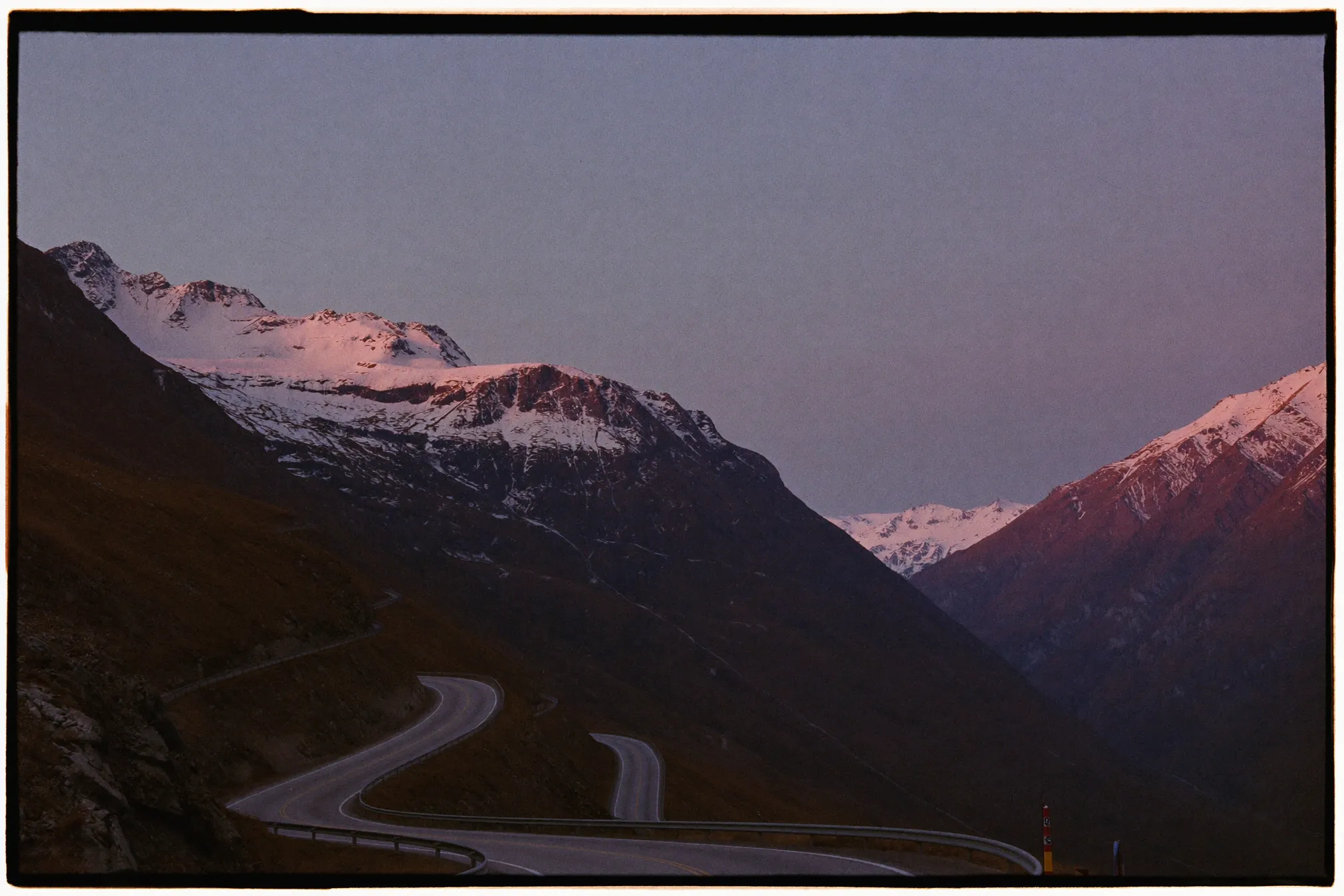
In the hills your true average speed is about 52 km/h, the slowest of any weekend type. Hairpins, gradients, photo stops and the occasional cow all tax the clock. Plans that ignore this turn magical roads into a deadline. So a mountain weekend needs fewer kilometres on paper to feel bigger in memory: an unhurried day of ~160 km in the passes is a genuinely full day.
Climb, summit, descend
Every good pass day has the same three acts, and your stops should follow them:
- The climb: windows down, second and third gear, coffee at the top; pass-top huts exist for exactly this moment.
- The summit hour: a 20-minute micro-hike to the cairn beats an hour of standing in the car park. Earn the photo.
- The descent: engine braking, long views, lunch in the valley you've just watched approach for half an hour.
What it costs up there
Mountain routes carry the heaviest toll-and-parking load of any weekend type: passes, tunnels and summit car parks can push that line toward €14 a day, above the flat €8 the planner budgets — so treat a mountain plan's estimate as its floor. Fuel burn also rises with gradient (climbing costs more than the descent gives back). Two people, two days, comfort mood: expect €520–580 all-in. The full method is in the cost guide.
Altitude packing, in one paragraph
Whatever the valley says, the summit is ten degrees colder and twice as bright. A warm layer and real sunscreen are non-negotiable; shoes with actual grip turn viewpoints into micro-hikes; a light rain shell weighs nothing and rescues afternoons. The packing list handles the rest.
If you only have one day
Mountains are the best day trip there is: one pass out, lunch at altitude, a different pass home. The planner link below opens pre-set for exactly that shape — a one-day plan with a balanced stop rhythm — and turns into your real roads the moment you pin the passes.